Sam Watts
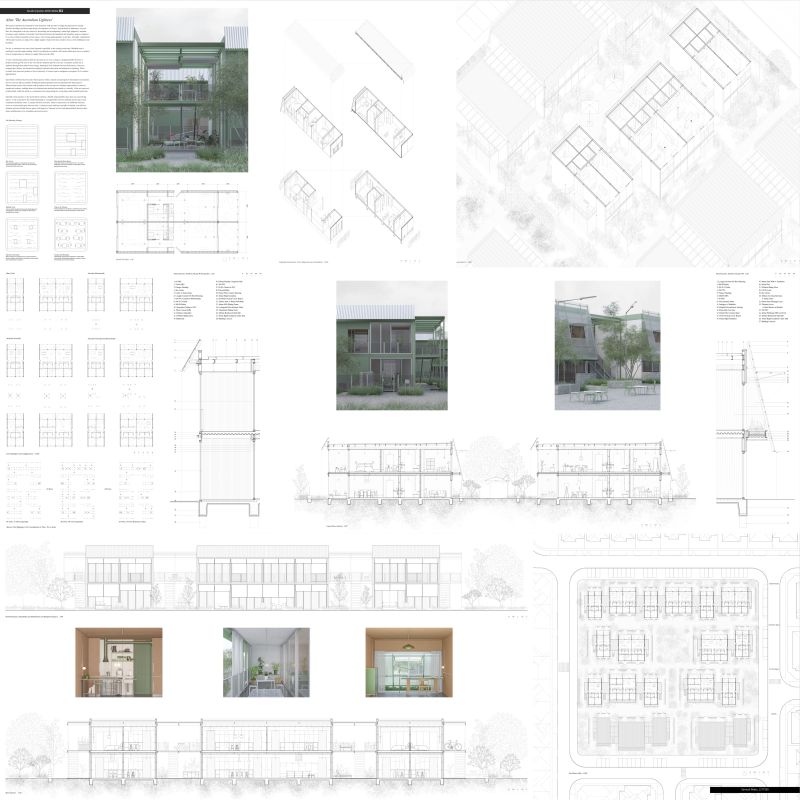
After ‘The Australian Ugliness’
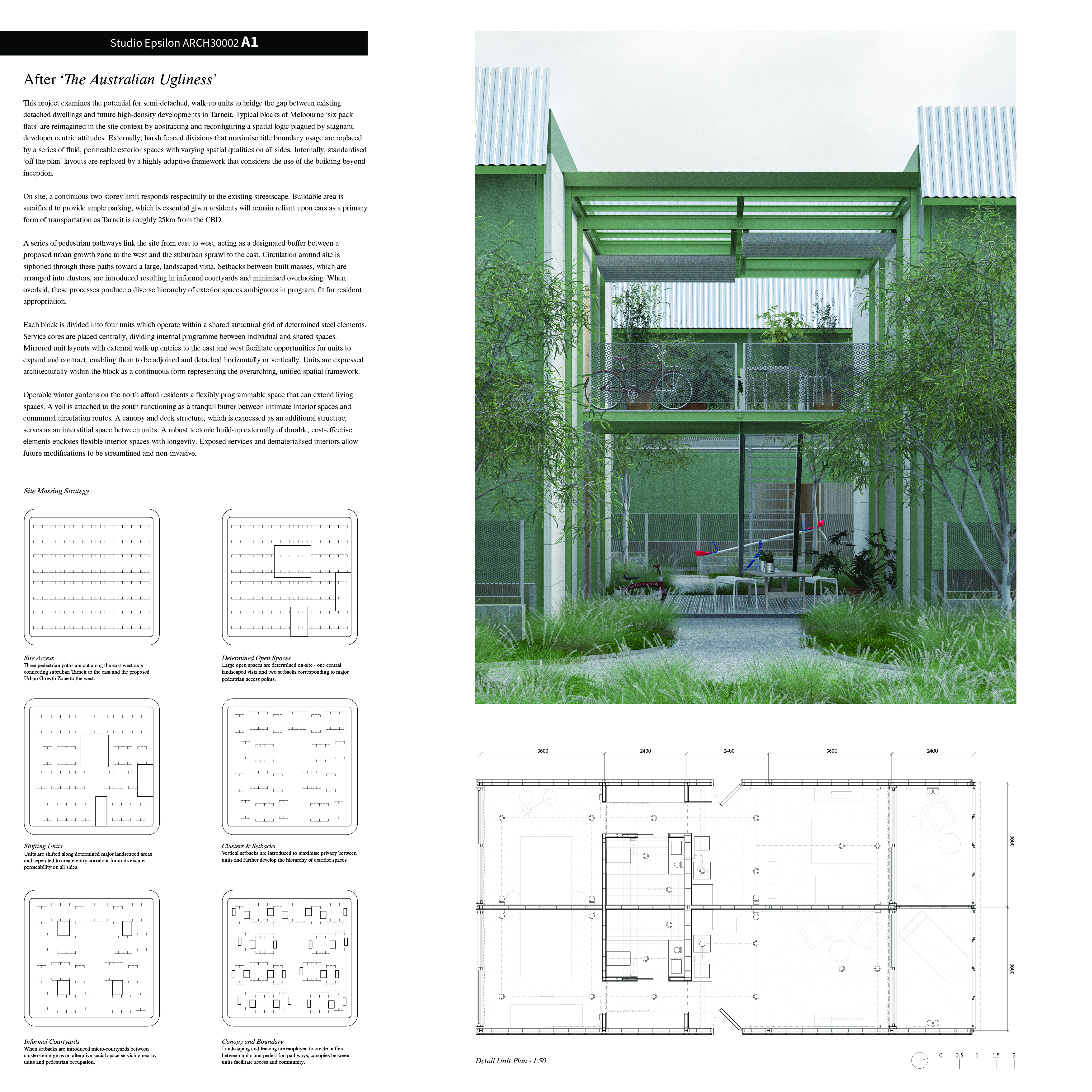
This project examines the potential for semi-detached, walk-up units to bridge the gap between existing detached dwellings and future high-density developments in Tarneit. Typical blocks of Melbourne ‘six pack flats’ are reimagined in the site context by abstracting and reconfiguring a spatial logic plagued by stagnant, developer centric attitudes. Externally, harsh fenced divisions that maximise title boundary usage are replaced by a series of fluid, permeable exterior spaces with varying spatial qualities on all sides. Internally, standardised ‘off the plan’ layouts are replaced by a highly adaptive framework that considers the use of the building beyond inception.
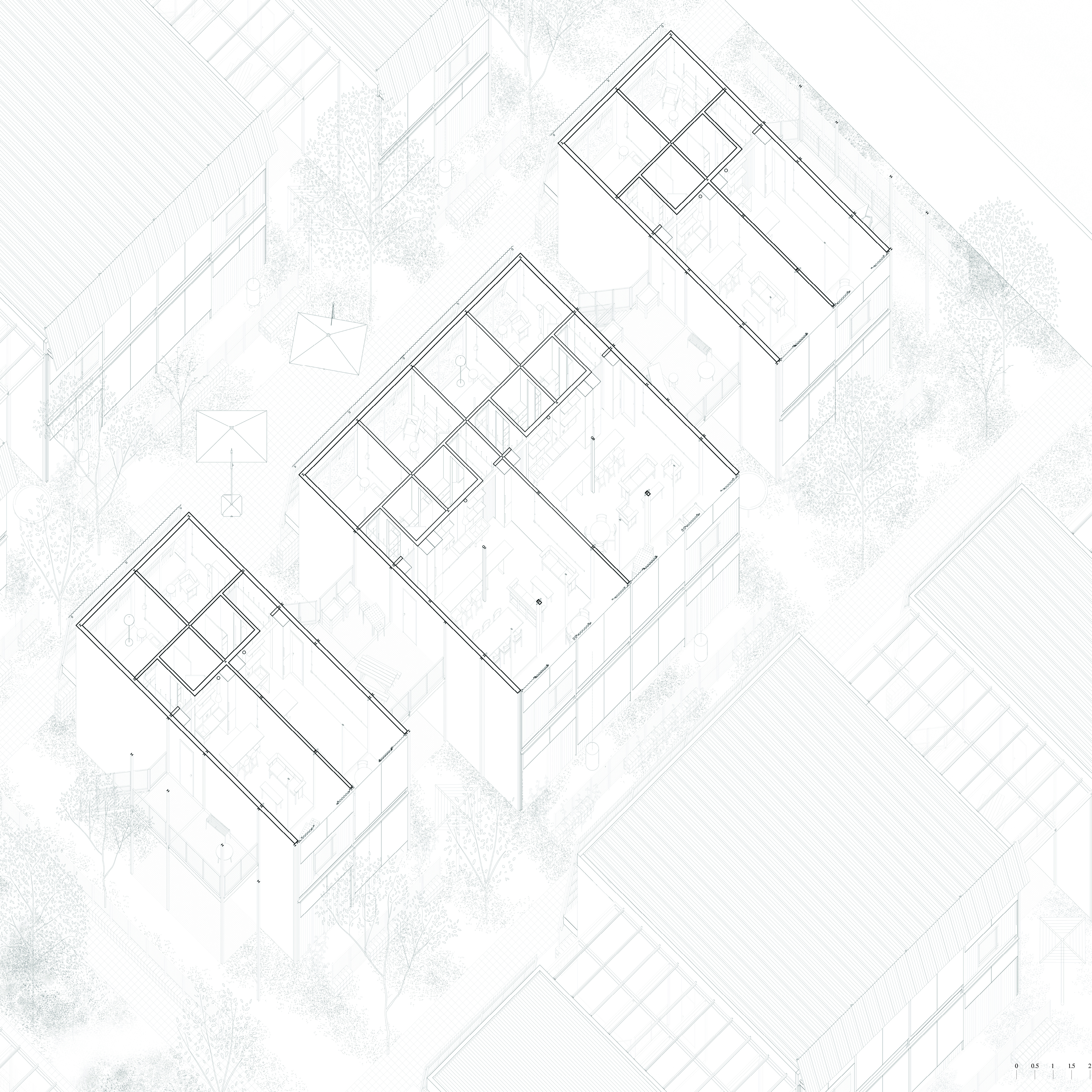
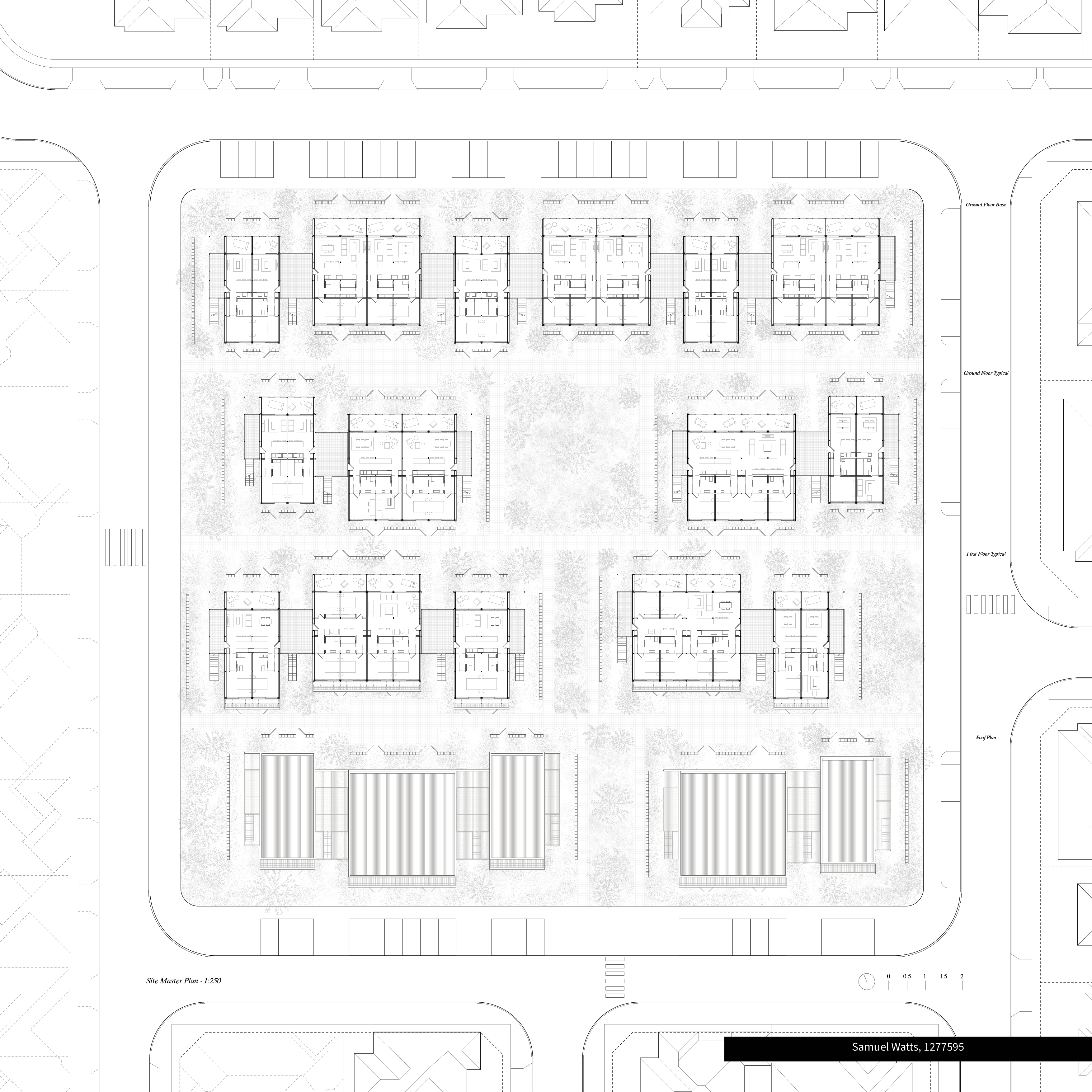
A series of pedestrian pathways link the site from east to west, acting as a designated buffer between a proposed urban growth zone to the west and the suburban sprawl to the east. Circulation around site is siphoned through these paths toward a large, landscaped vista. Setbacks between built masses, which are arranged into clusters, are introduced resulting in informal courtyards and minimised overlooking. When overlaid, these processes produce a diverse hierarchy of exterior spaces ambiguous in program, fit for resident appropriation.
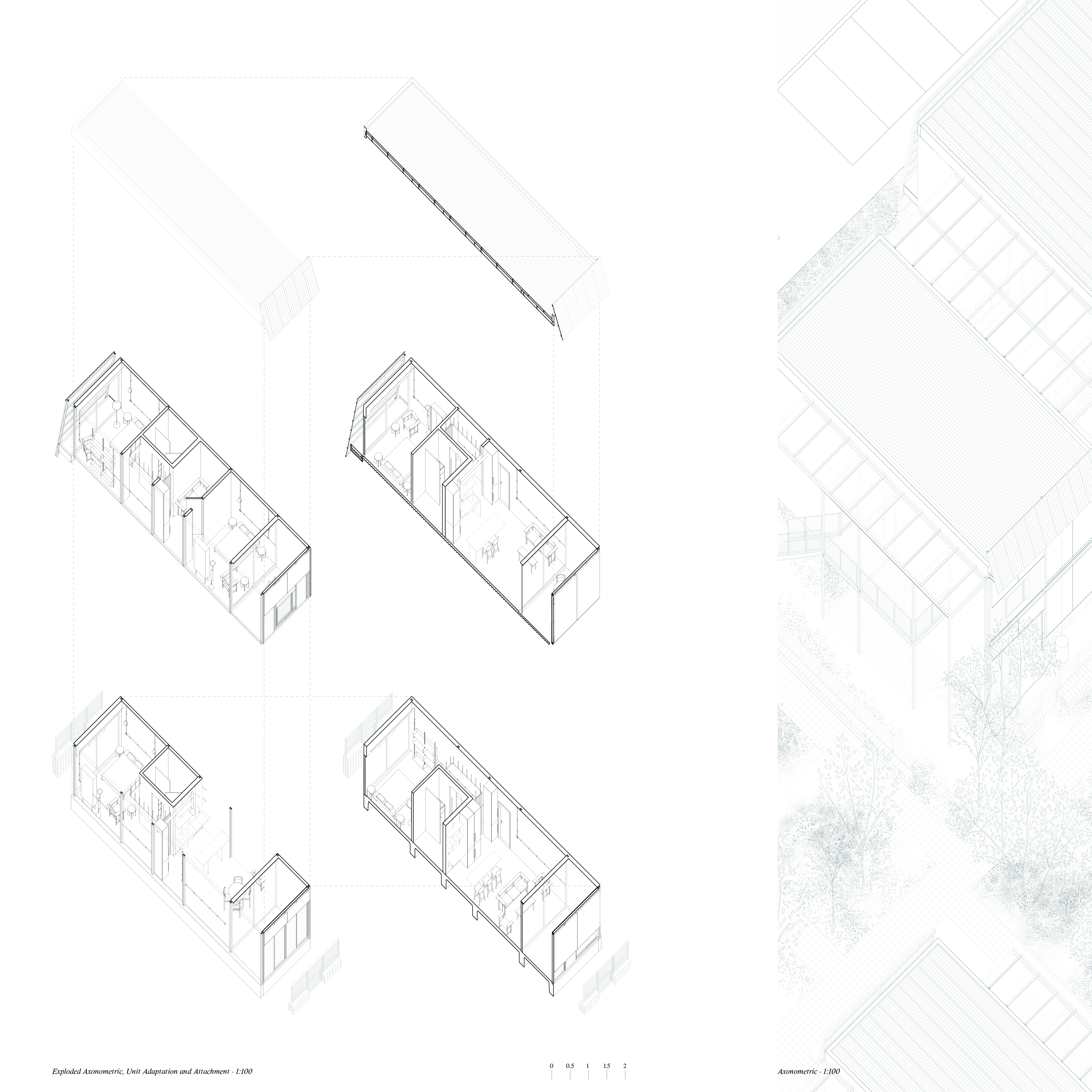
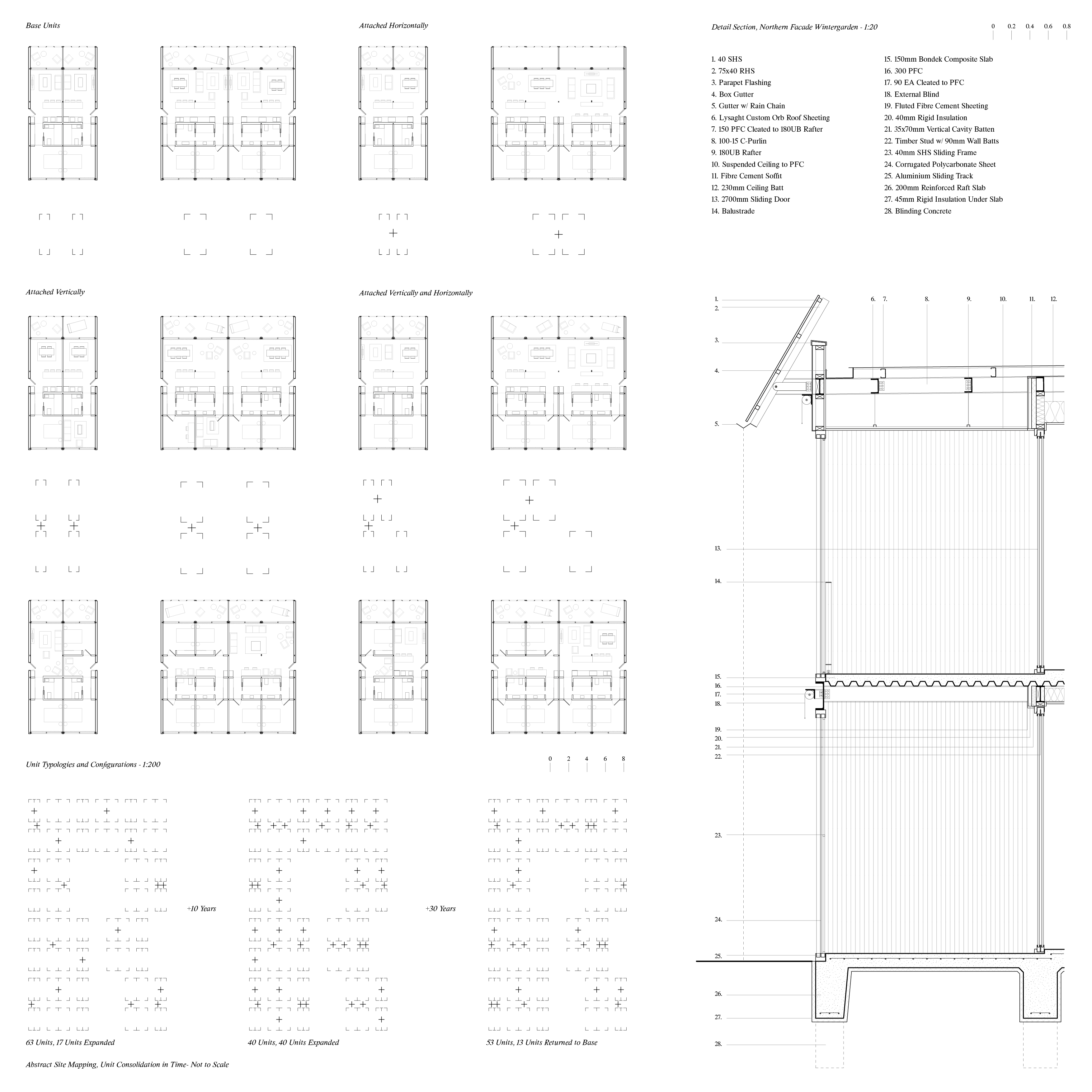
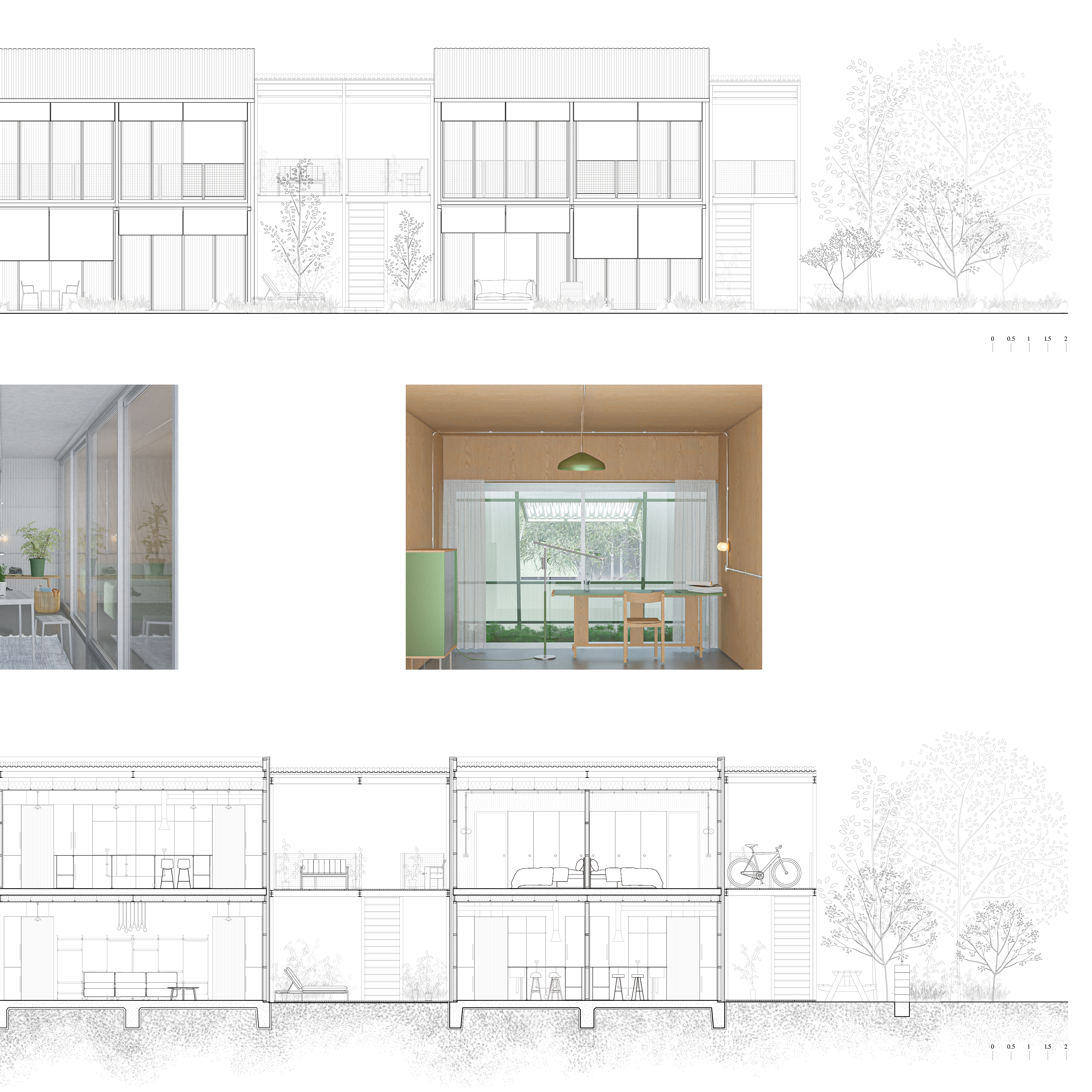
Each block is divided into four units which operate within a shared structural grid of determined steel elements. Service cores are placed centrally, dividing internal programme between individual and shared spaces. Mirrored unit layouts with external walk-up entries to the east and west facilitate opportunities for units to expand and contract, enabling them to be adjoined and detached horizontally or vertically. Units are expressed architecturally within the block as a continuous form representing the overarching, unified spatial framework.
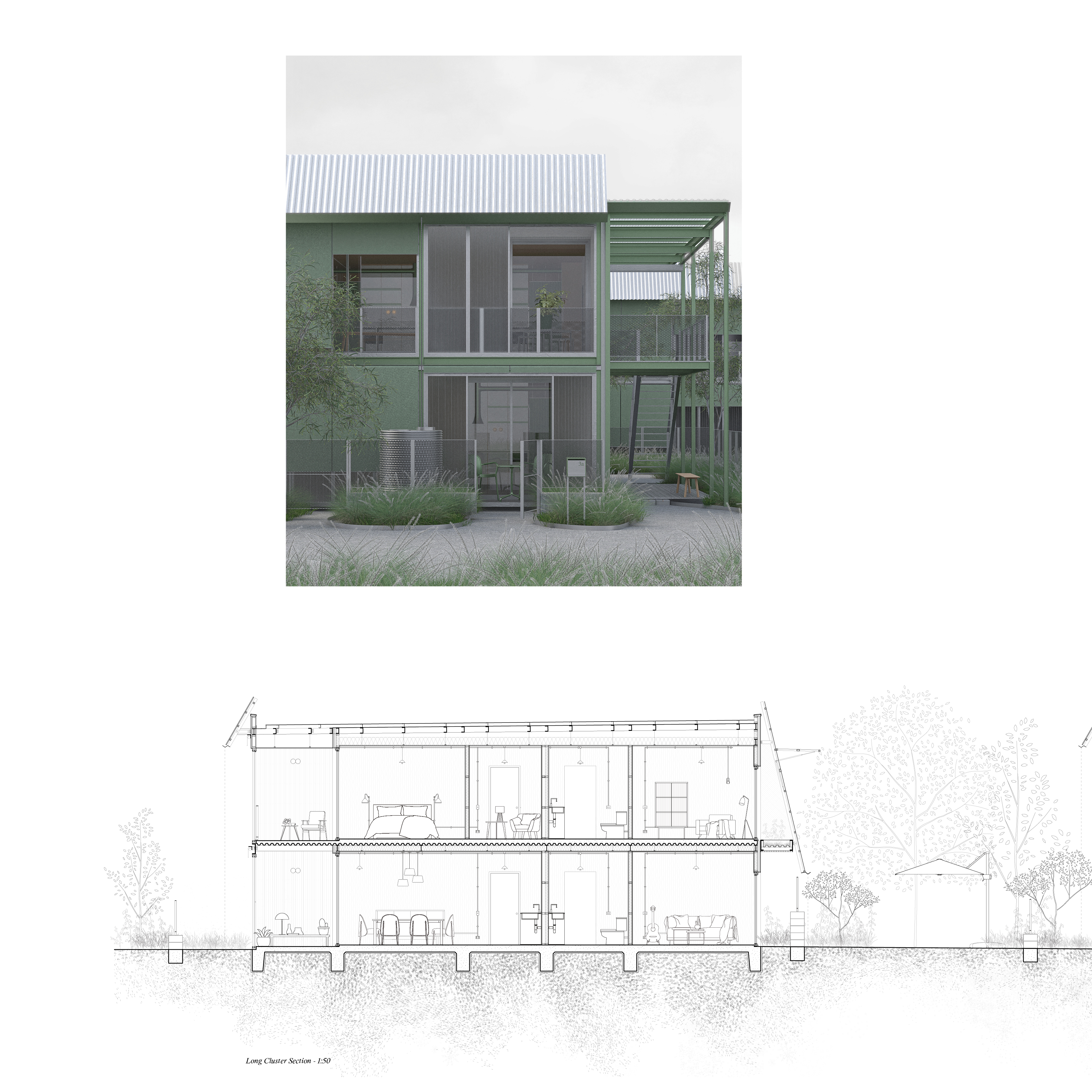
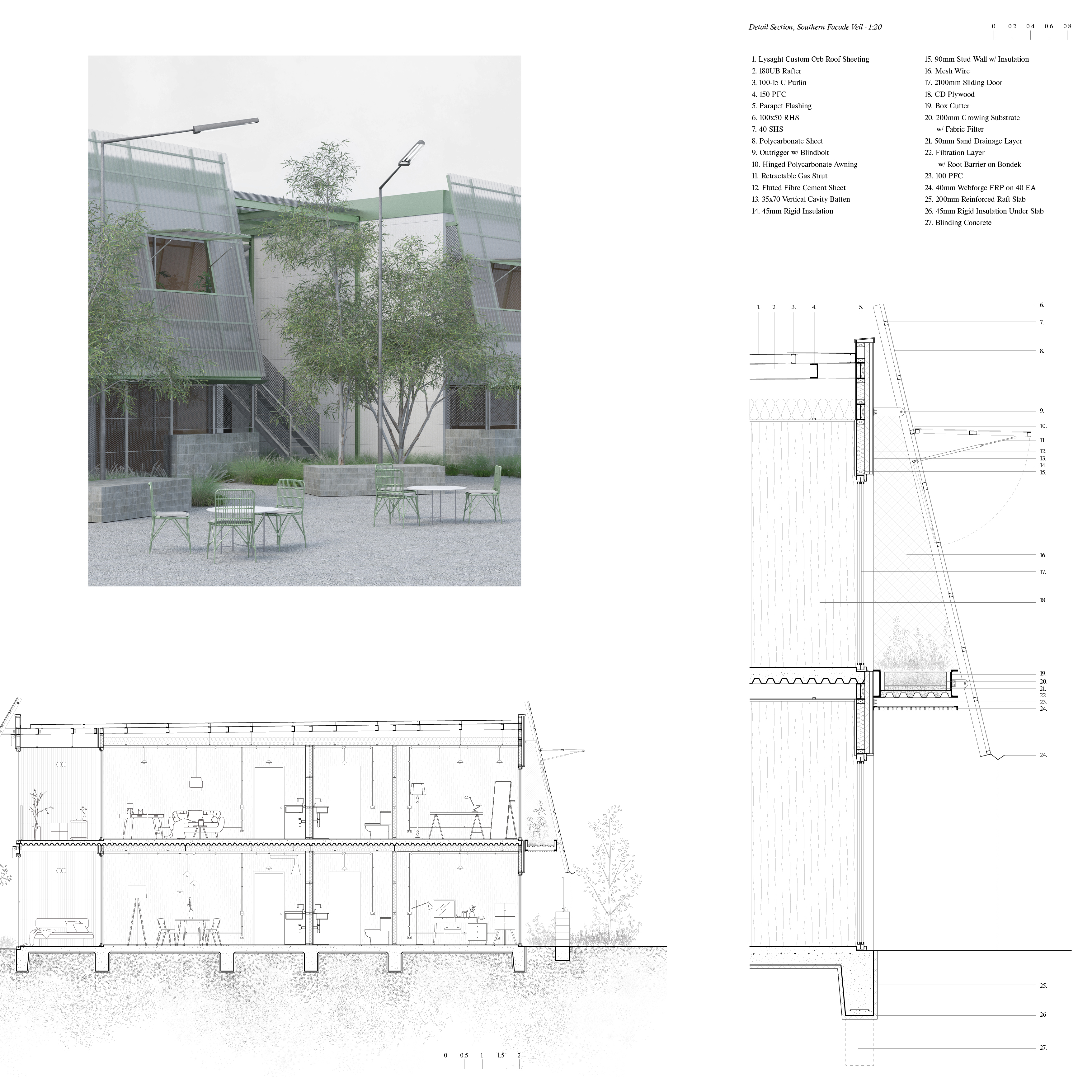
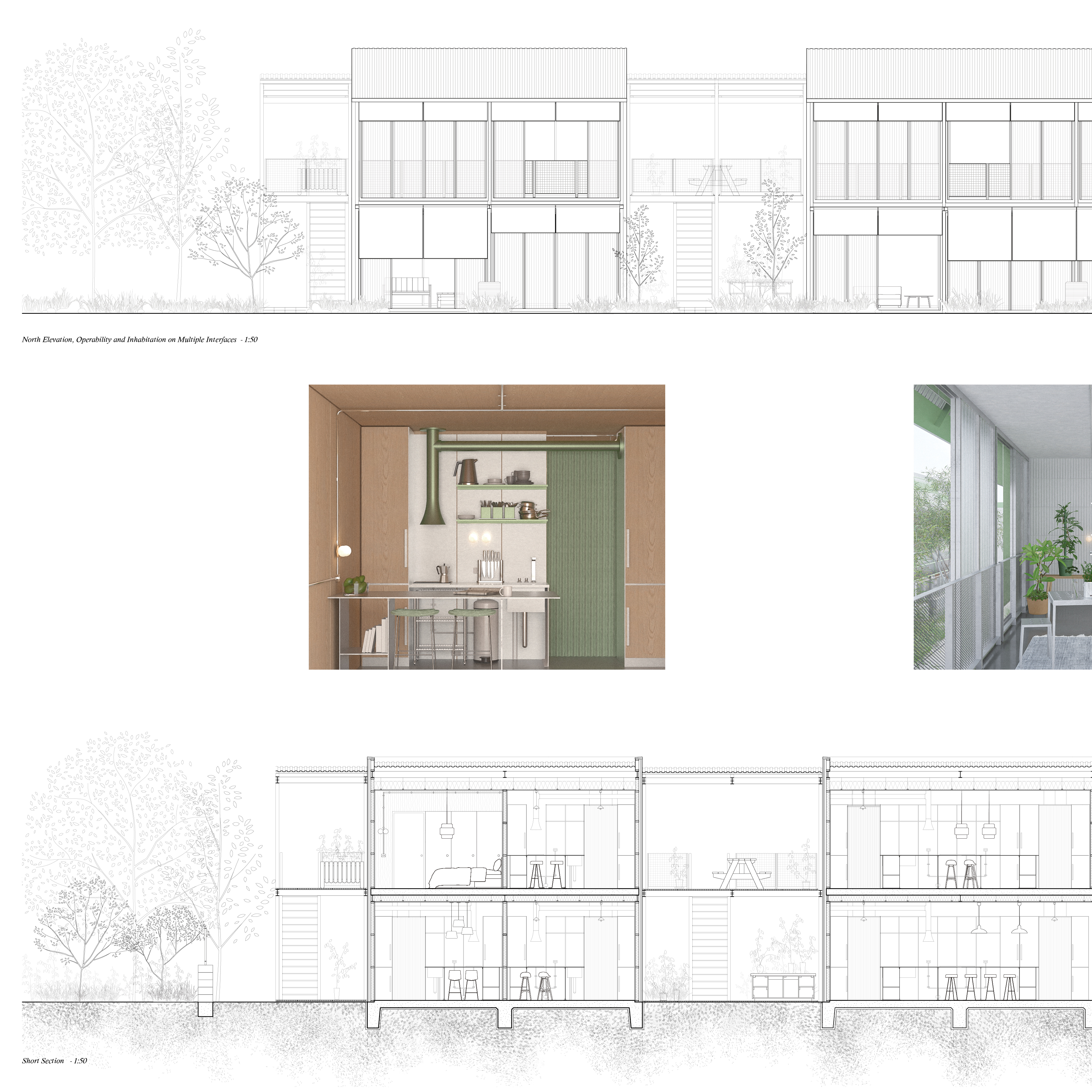
Operable winter gardens on the north afford residents a flexibly programmable space that can extend living spaces. A veil is attached to the south functioning as a tranquil buffer between intimate interior spaces and communal circulation routes. A canopy and deck structure, which is expressed as an additional structure, serves as an interstitial space between units. A robust tectonic build-up externally of durable, cost-effective elements encloses flexible interior spaces with longevity. Exposed services and dematerialised interiors allow future modifications to be streamlined and non-invasive.
Need enrolment assistance?
Stop 1 provides enrolment and other support to Bachelor of Design and Melbourne School of Design students.