Claudia Colvin
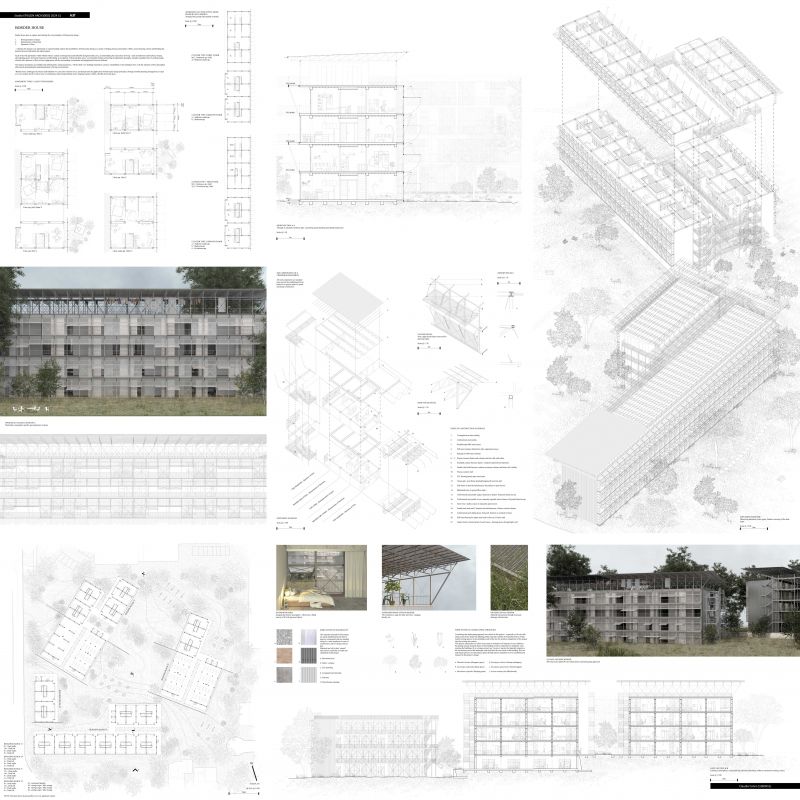
Boarder House
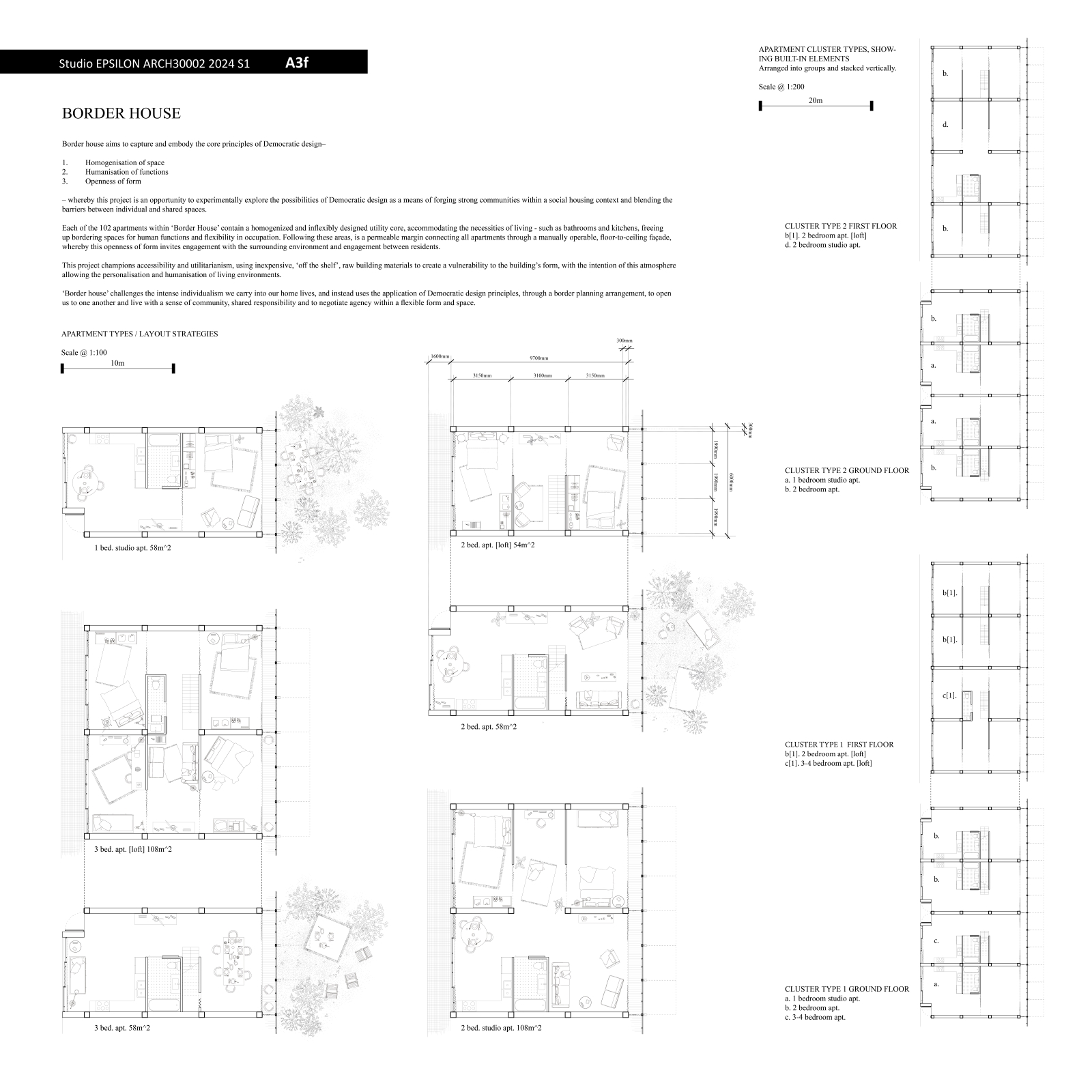
Border house aims to capture and embody the core principles of Democratic design–
1. Homogenisation of space
2. Humanisation of functions
3. Openness of form
– whereby this project is an opportunity to explore the possibilities of Democratic design as a means of forging strong communities within a social housing context and blending the barriers between individual and shared spaces.
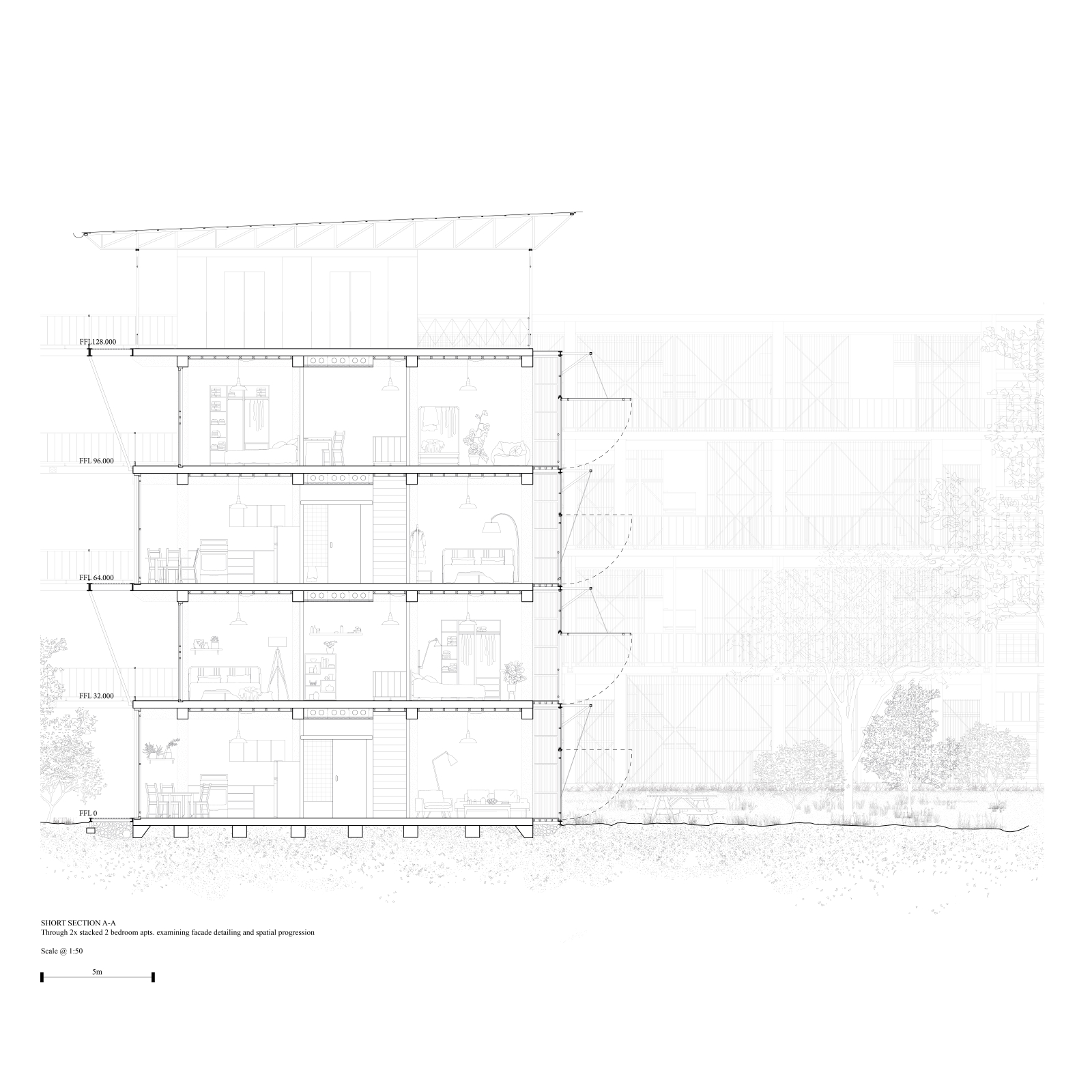
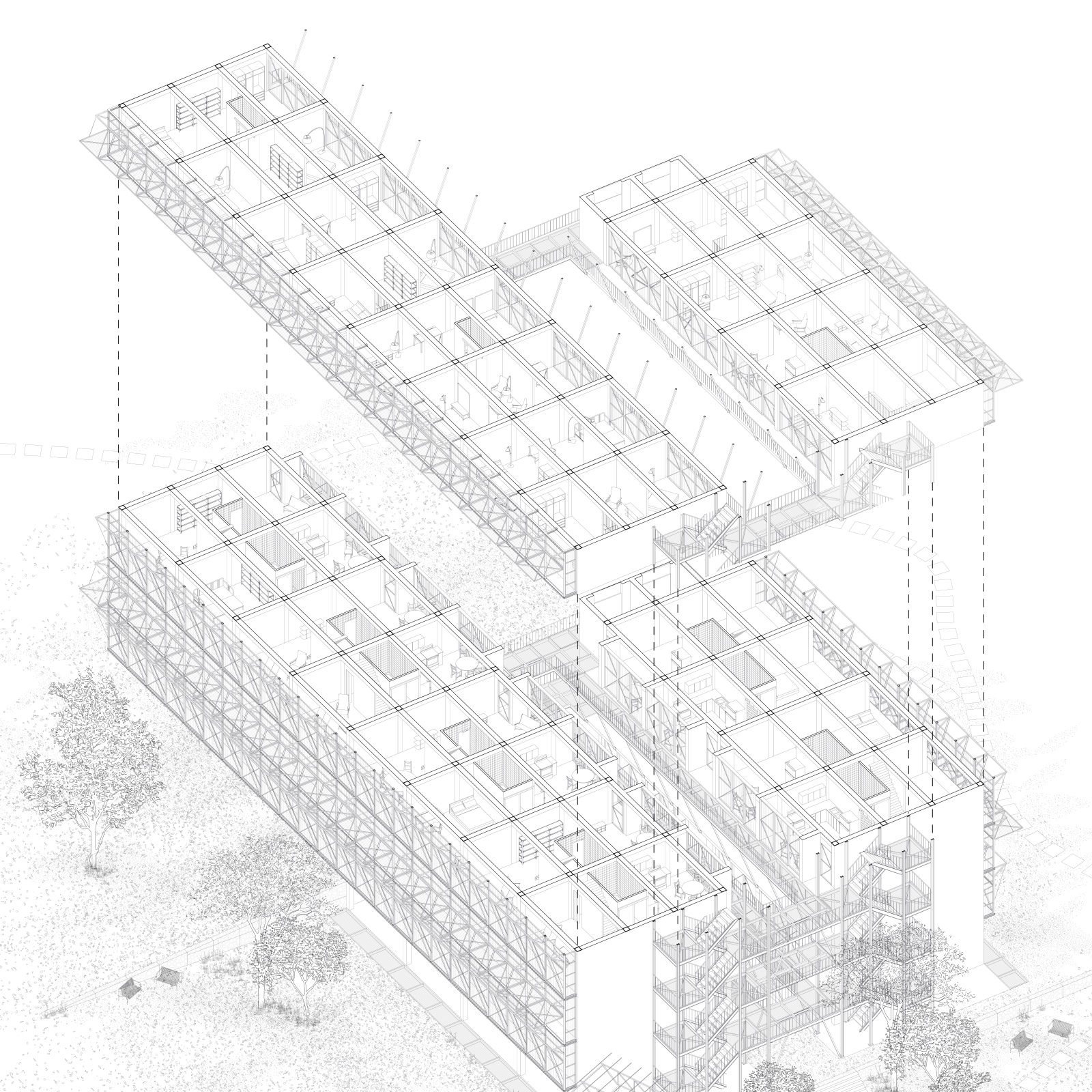
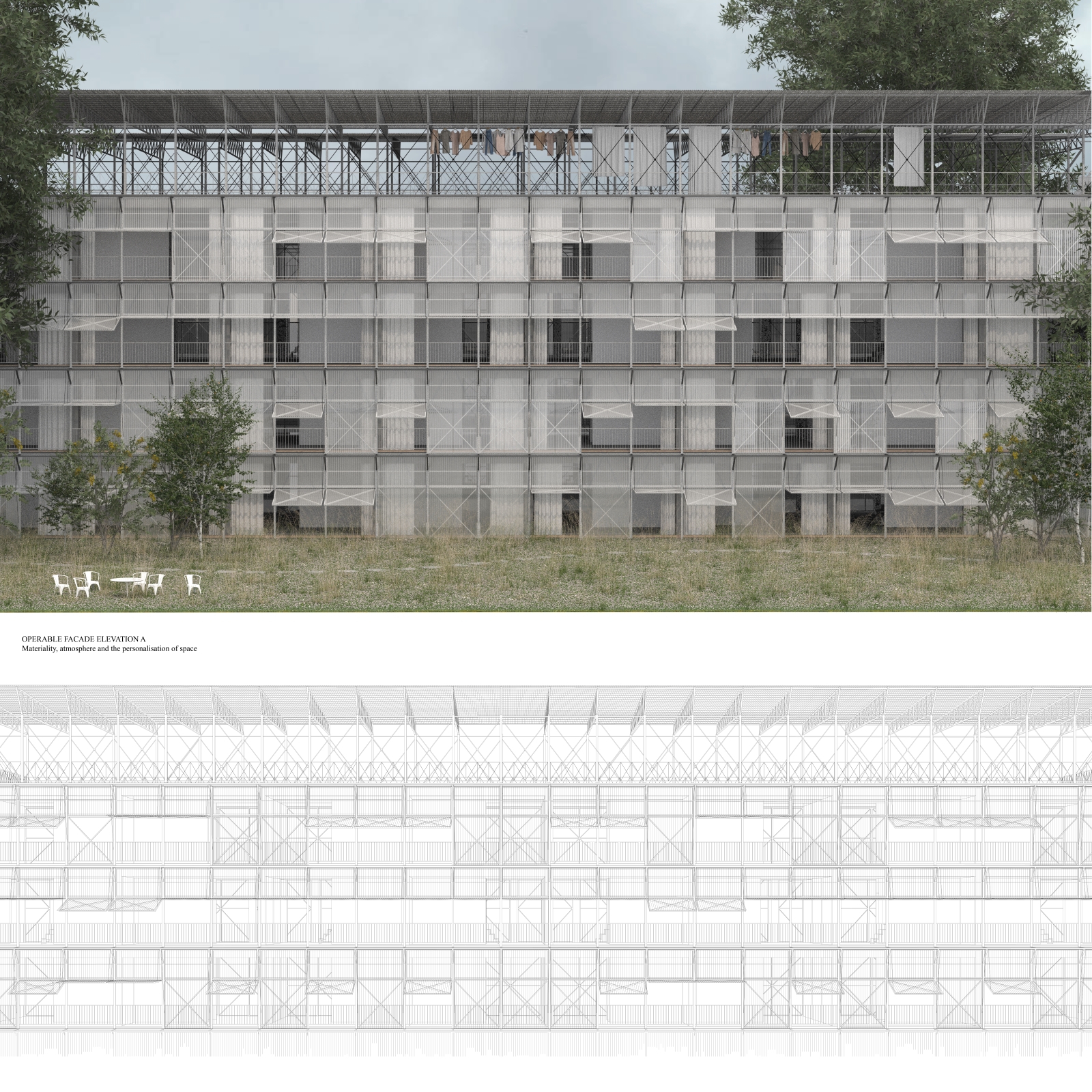
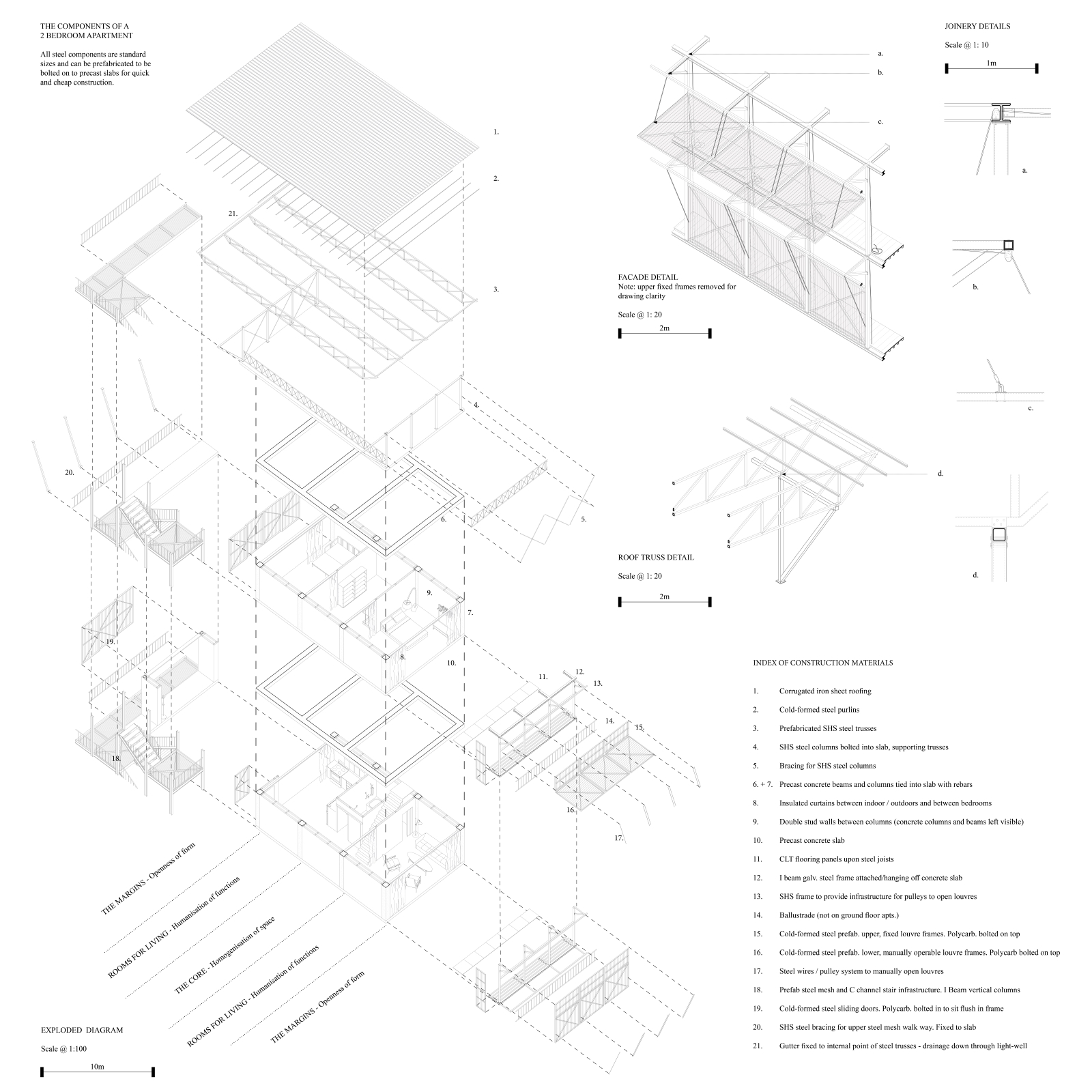
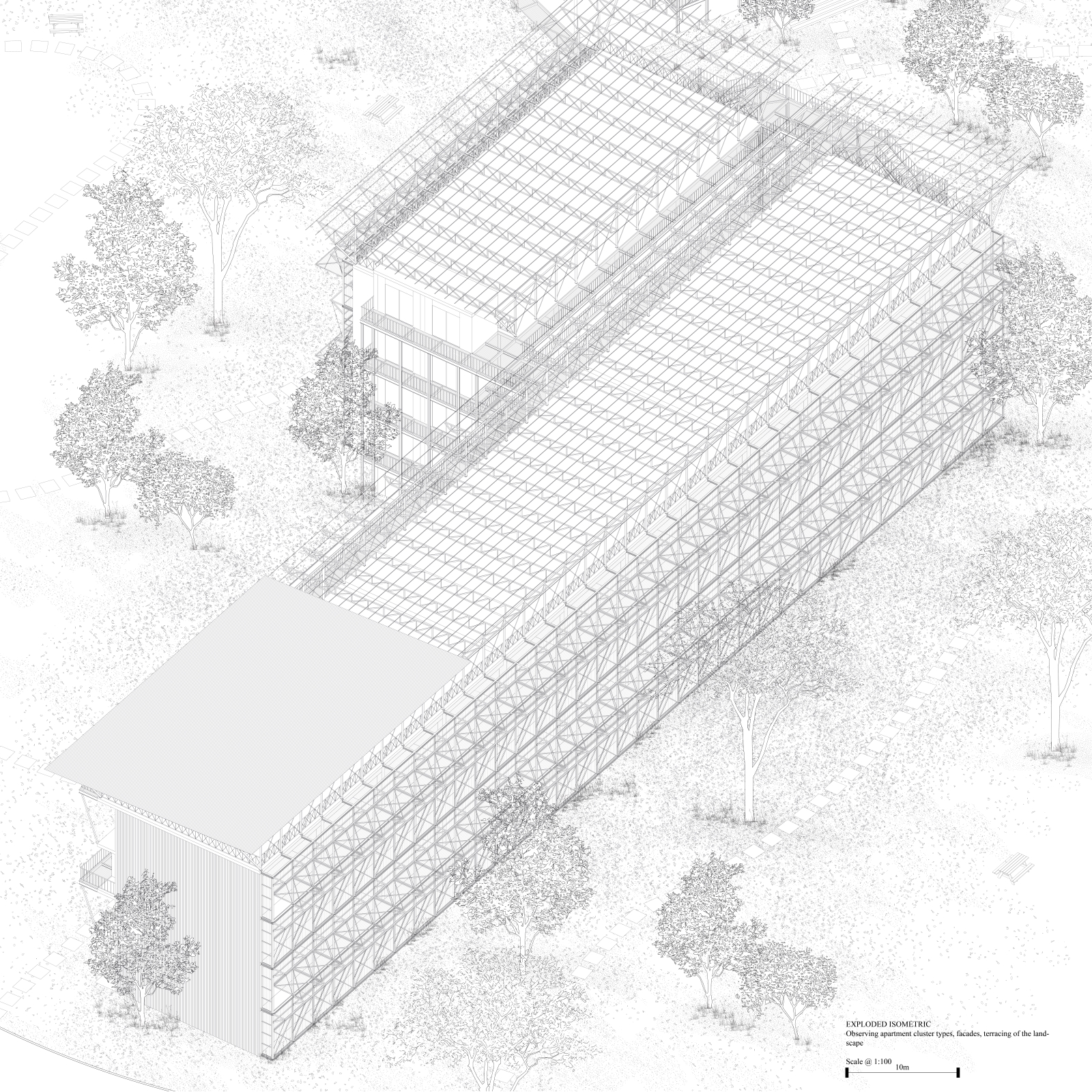
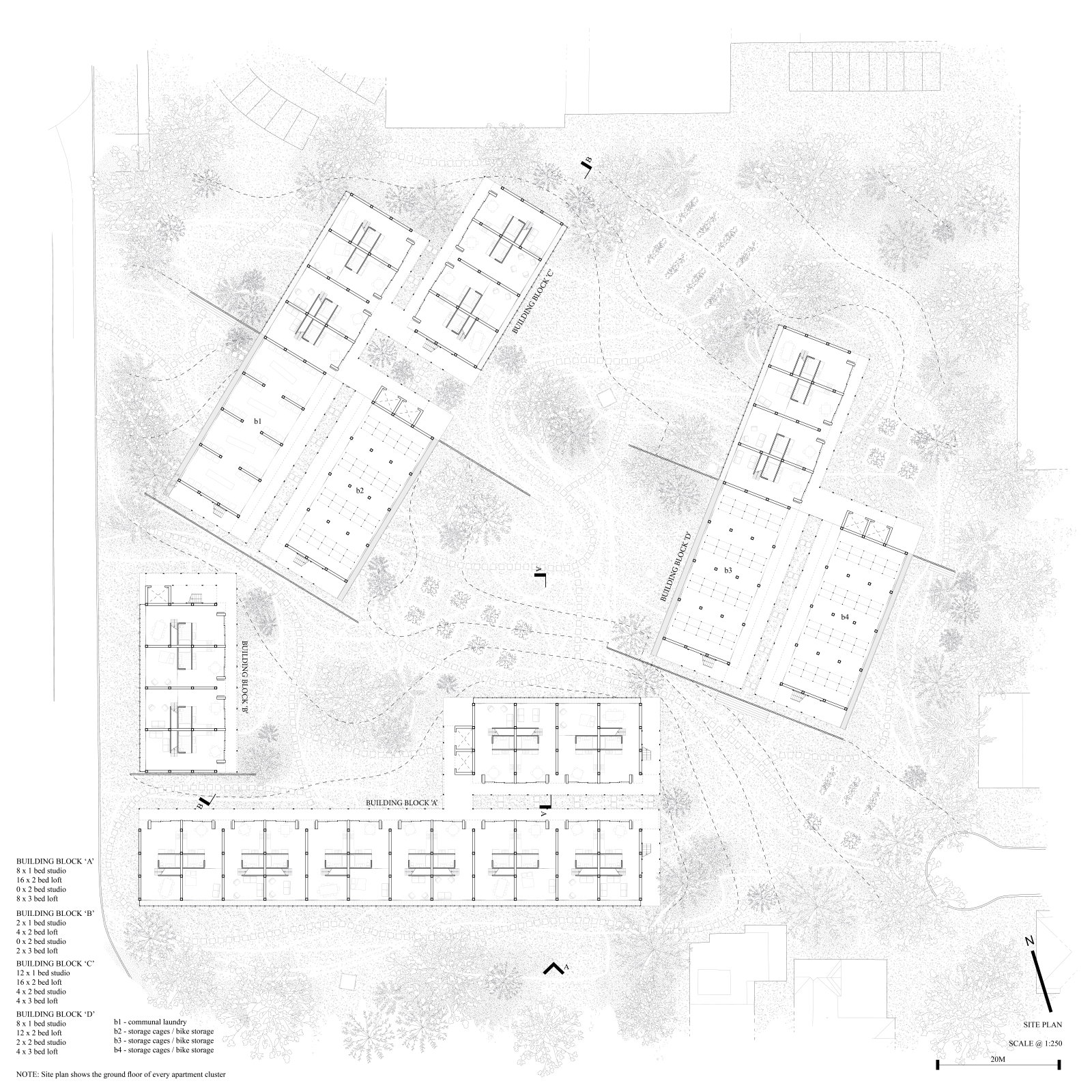
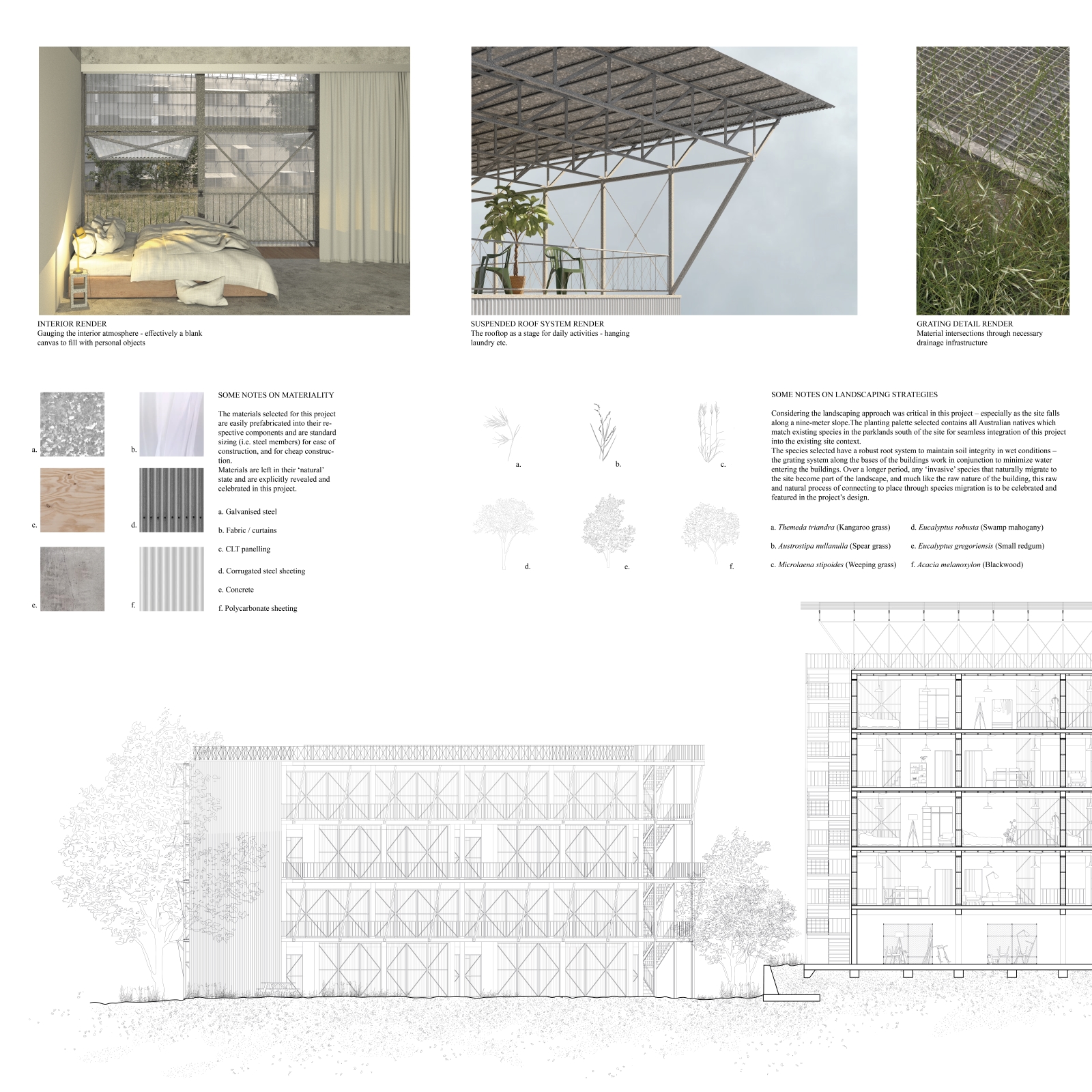
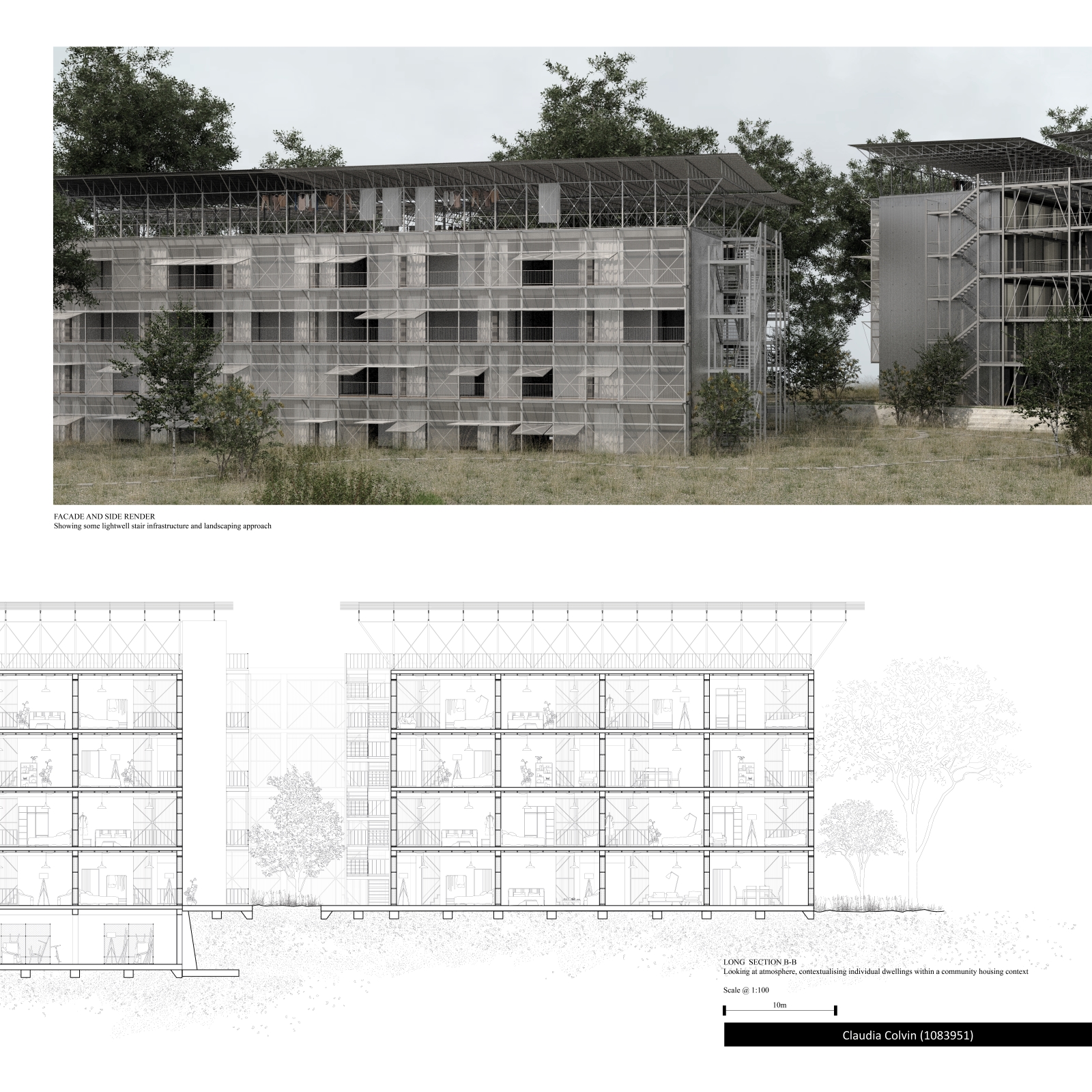
Each of the 104 apartments within ‘Border House’ contain a homogenized and inflexibly designed utility core, accommodating the necessities of living - such as bathrooms and kitchens, freeing up bordering spaces for human functions and flexibility in occupation. Following these areas, is a permeable margin connecting all apartments through a manually operable, floor-to-ceiling façade, whereby this openness of form invites engagement with the surrounding environment and engagement between residents.
This project champions accessibility and utilitarianism, using inexpensive, ‘off the shelf’, raw building materials to create a vulnerability to the building’s form, with the intention of this atmosphere allowing the personalisation and humanisation of living environments.
‘Border house’ challenges the intense individualism we carry into our home lives, and instead uses the application of Democratic design principles, through a border planning arrangement, to open us to one another and live with a sense of community, shared responsibility and to negotiate agency within a flexible form and space.
Need enrolment assistance?
Stop 1 provides enrolment and other support to Bachelor of Design and Melbourne School of Design students.