Caitlynn Christie Amores
The Beehive
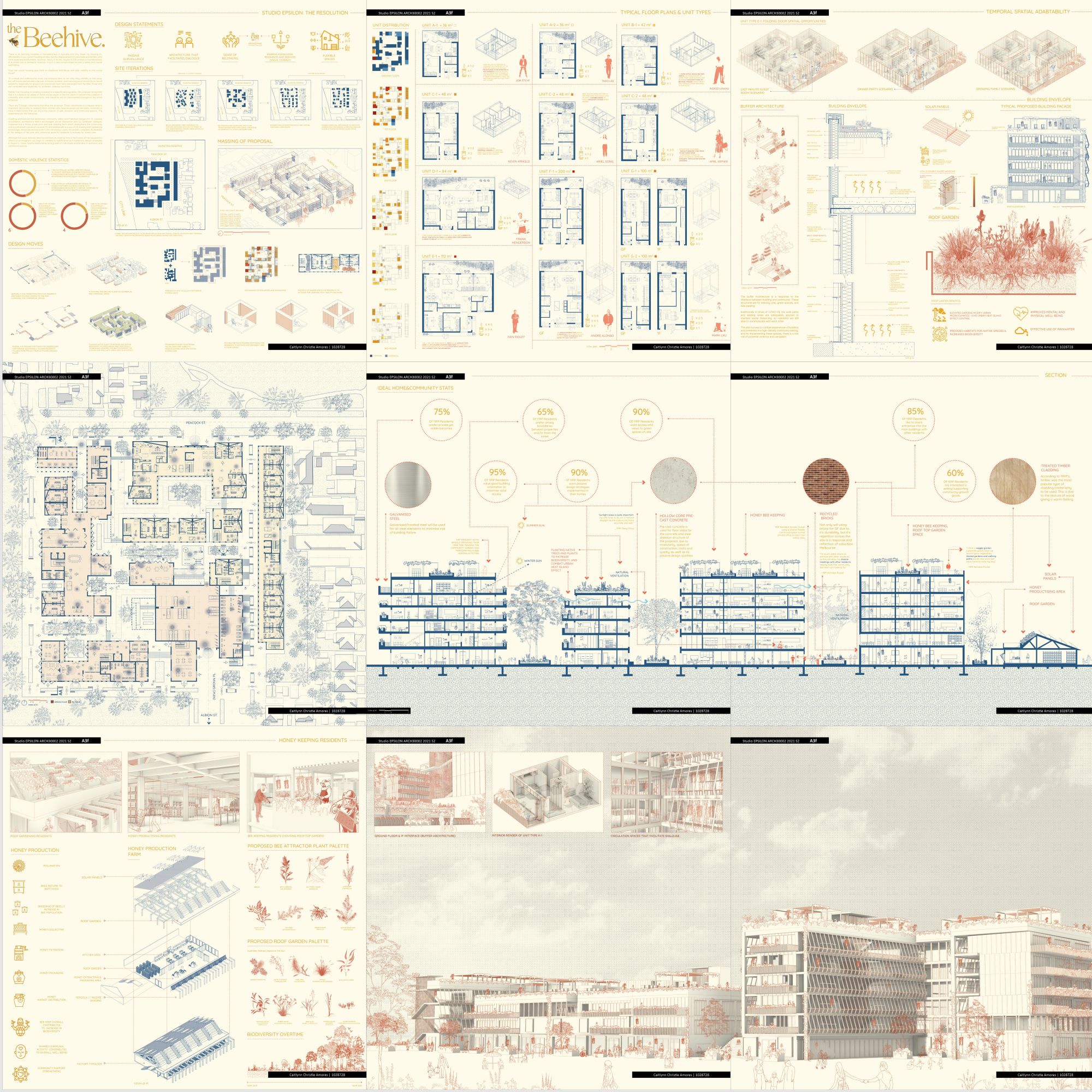
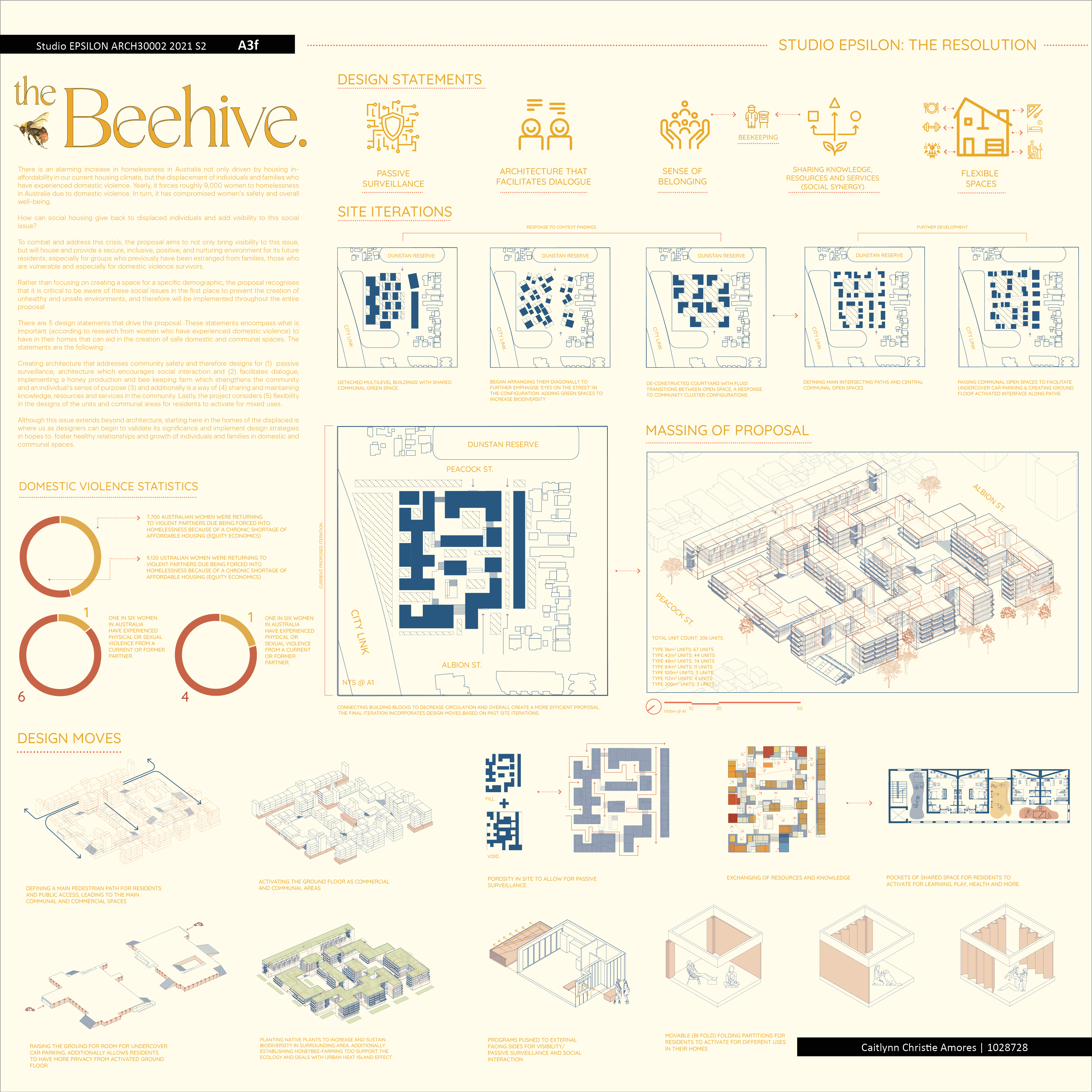
There is an alarming increase in homelessness in Australia not only driven by housing in-affordability in our current housing climate, but the displacement of individuals and families who have experienced domestic violence. Yearly, it forces roughly 9,000 women to homelessness in Australia due to domestic violence. In turn, it has compromised women’s safety and overall well-being.
How can social housing give back to displaced individuals and add visibility to this social issue?
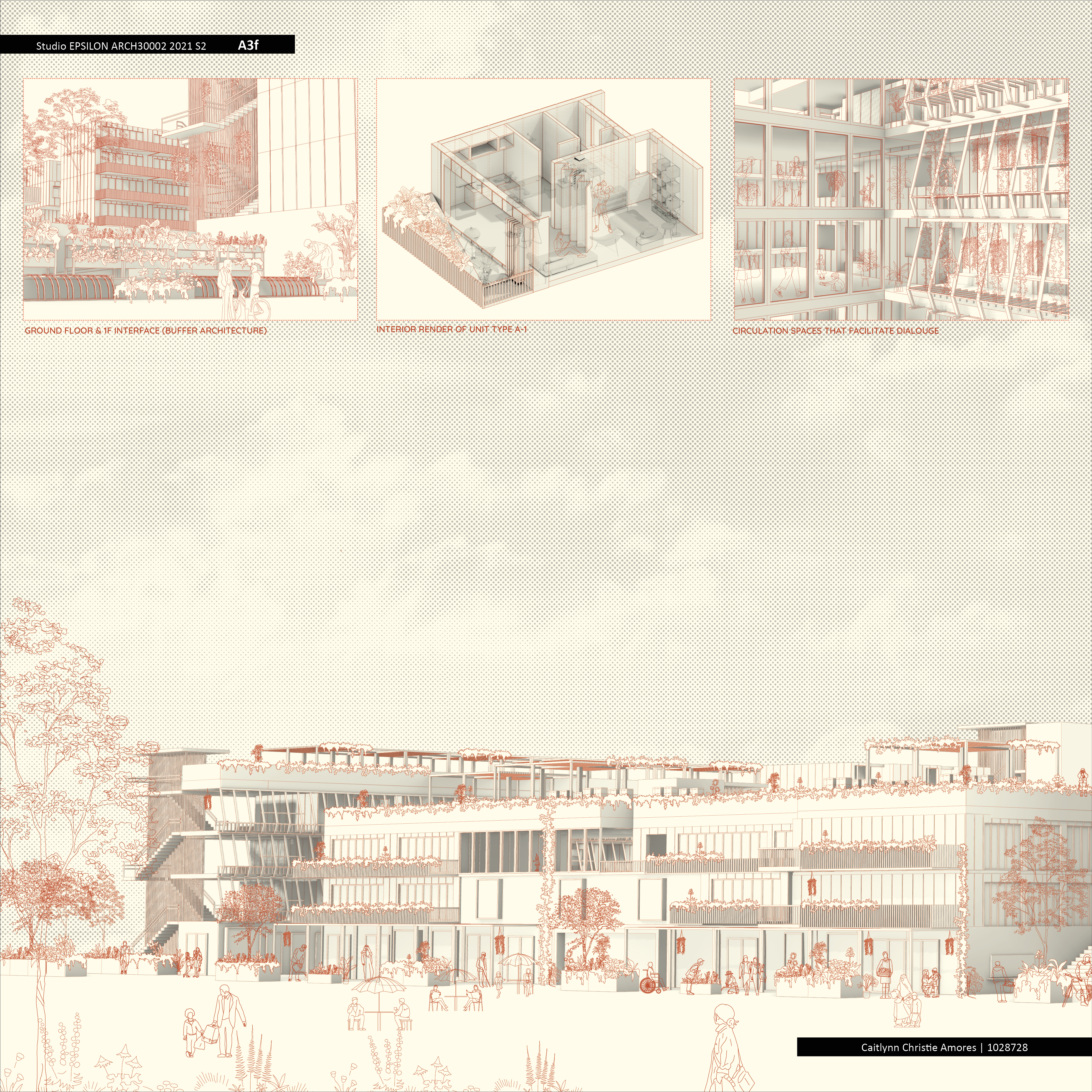
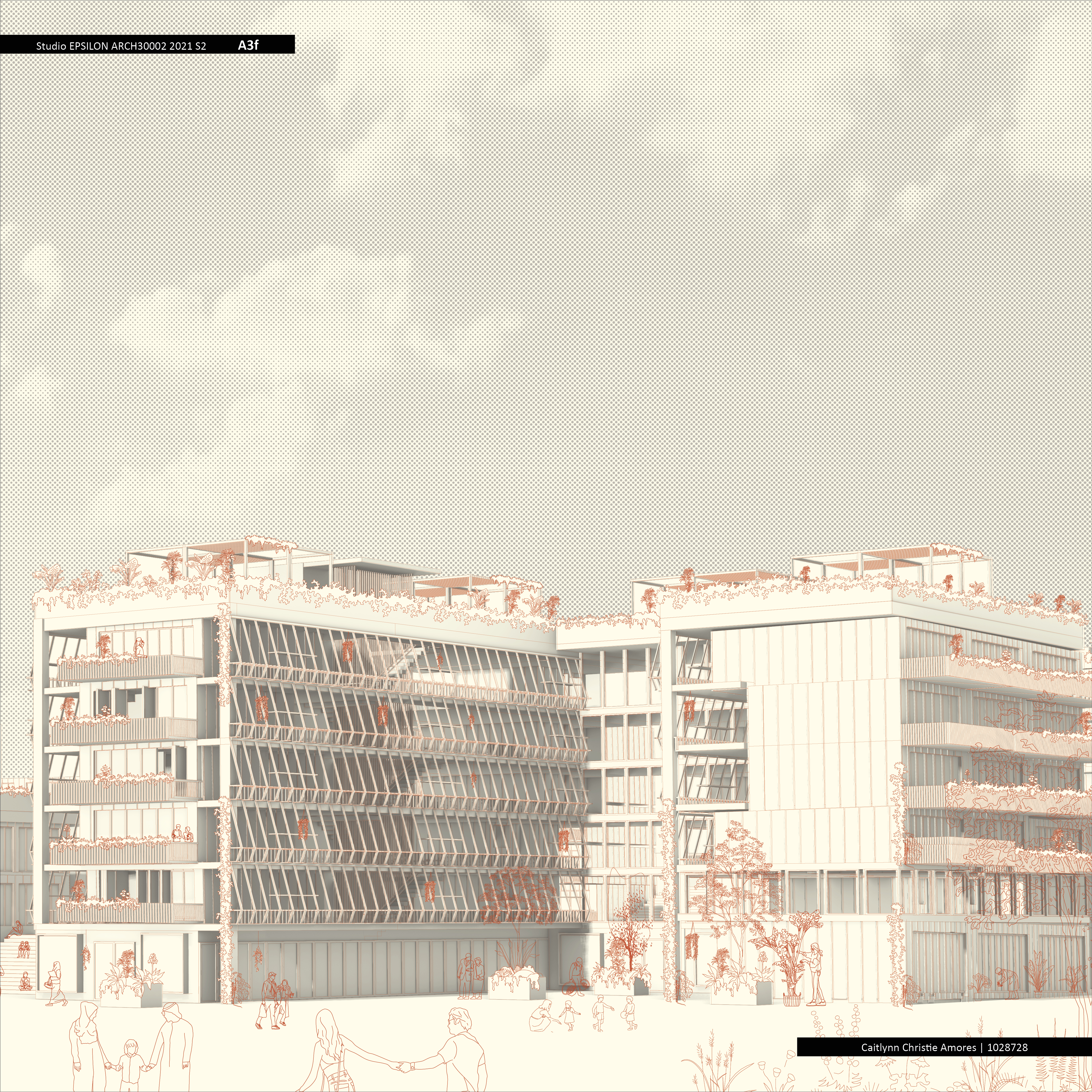
To combat and address this crisis, the proposal aims to not only bring visibility to this issue, but will house and provide a secure, inclusive, positive, and nurturing environment for its future residents, especially for groups who previously have been estranged from families, those who are vulnerable and especially for domestic violence survivors.
The proposal recognises that it is critical to be aware of these social issues in the first place to prevent the creation of unhealthy and unsafe environments, and therefore will be considered throughout the entire proposal.
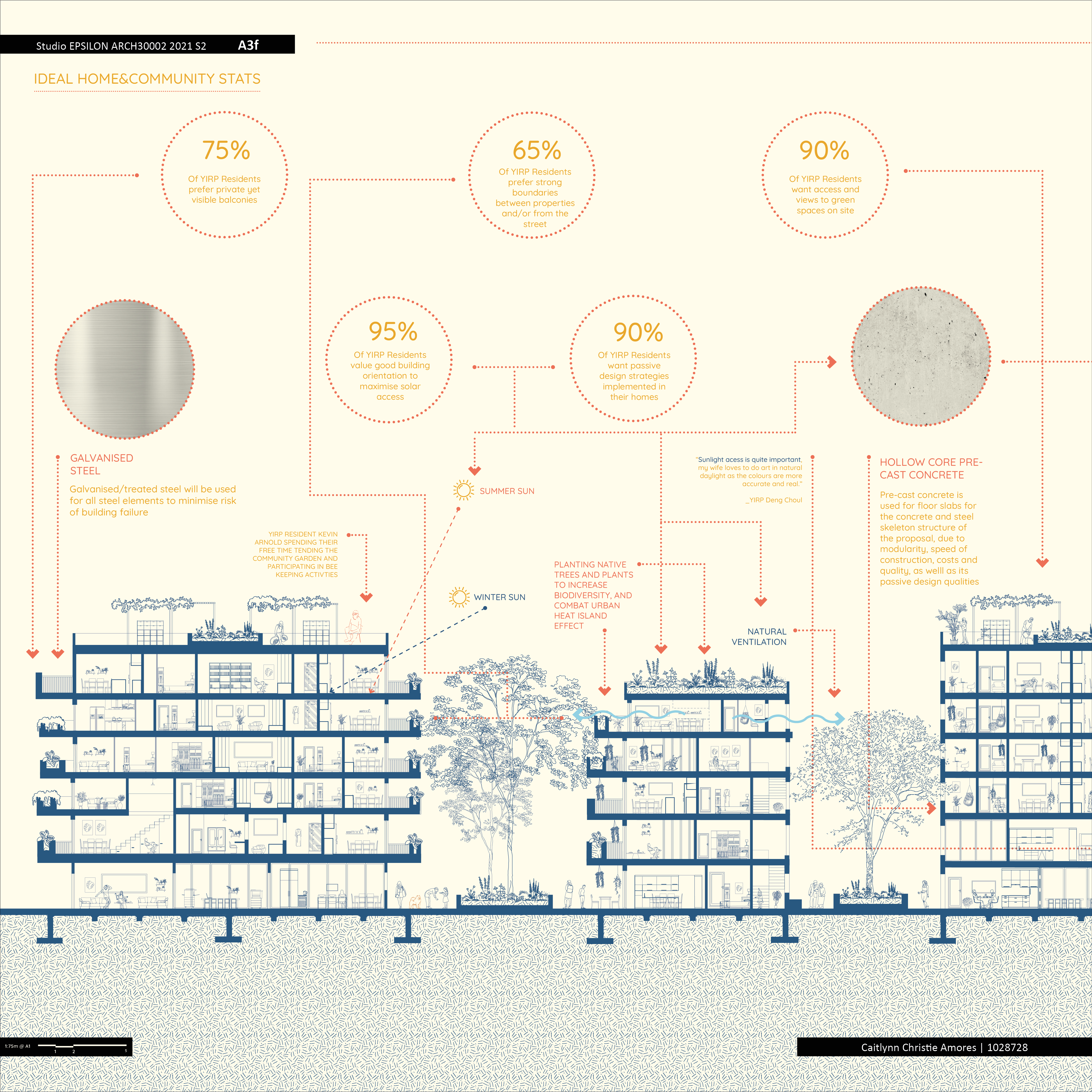
There are 5 design statements that drive the proposed design. These statements encompass what is important (according to research from women who have experienced domestic violence) to have in their homes that can aid in the creation of safe domestic and communal spaces. The statements are the following:
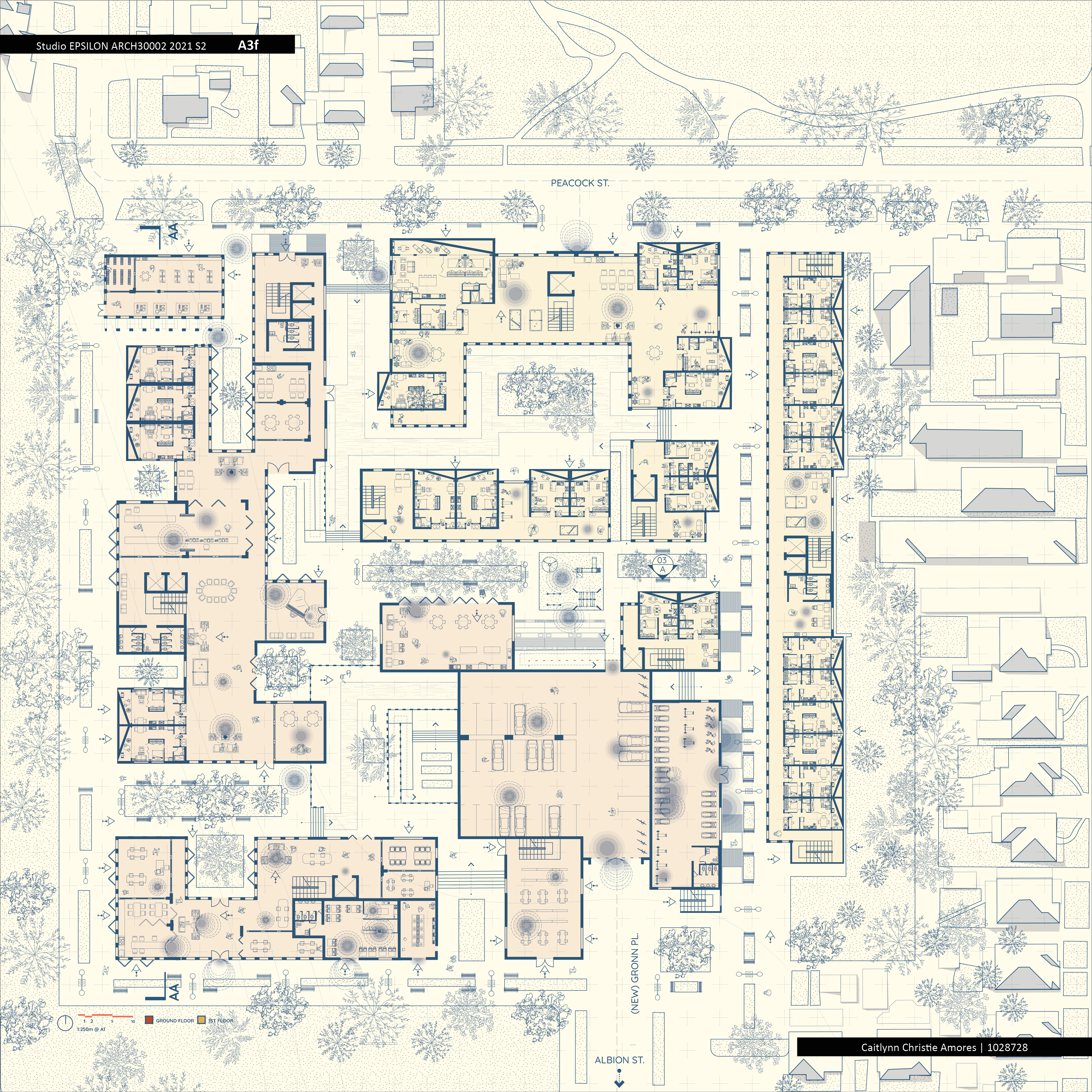
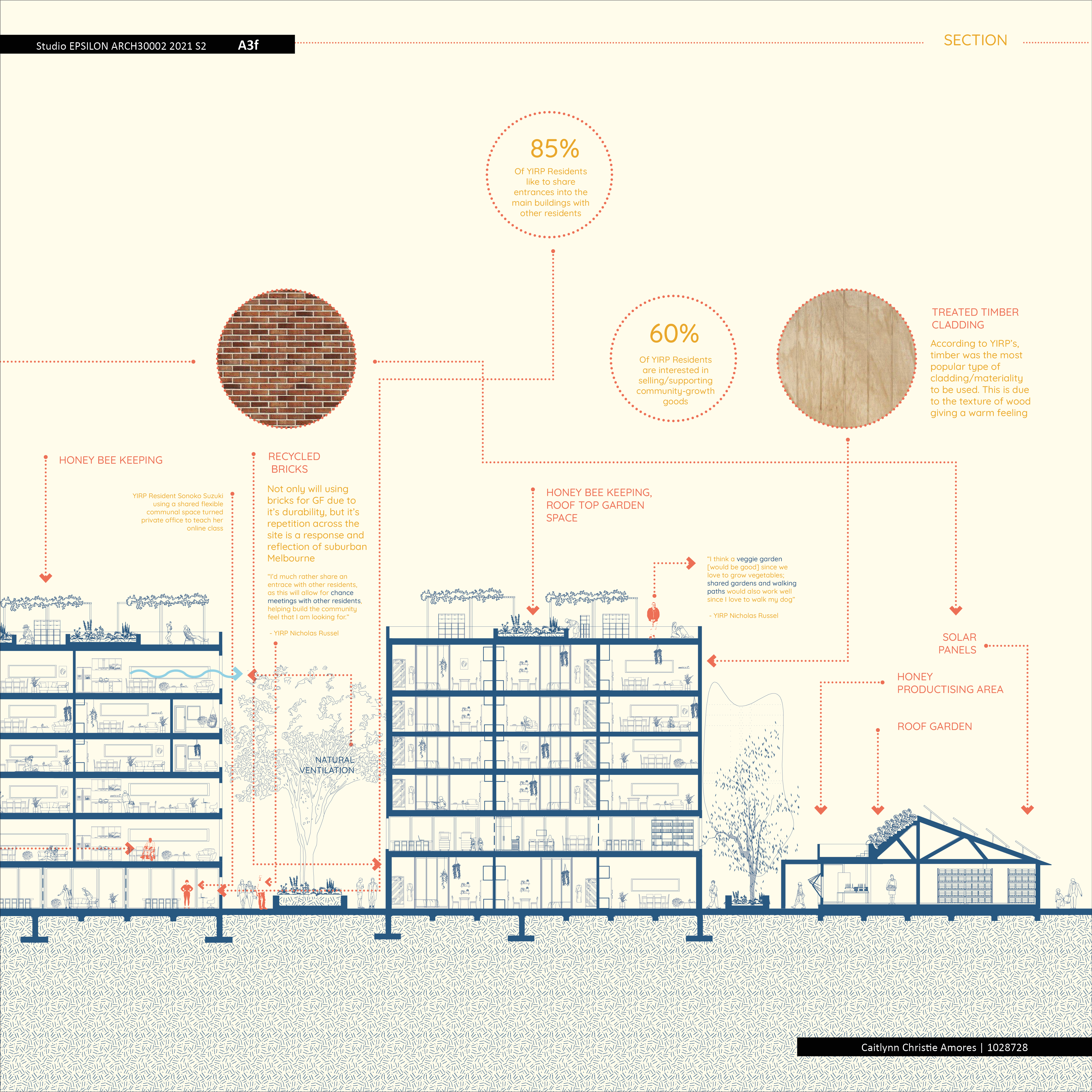
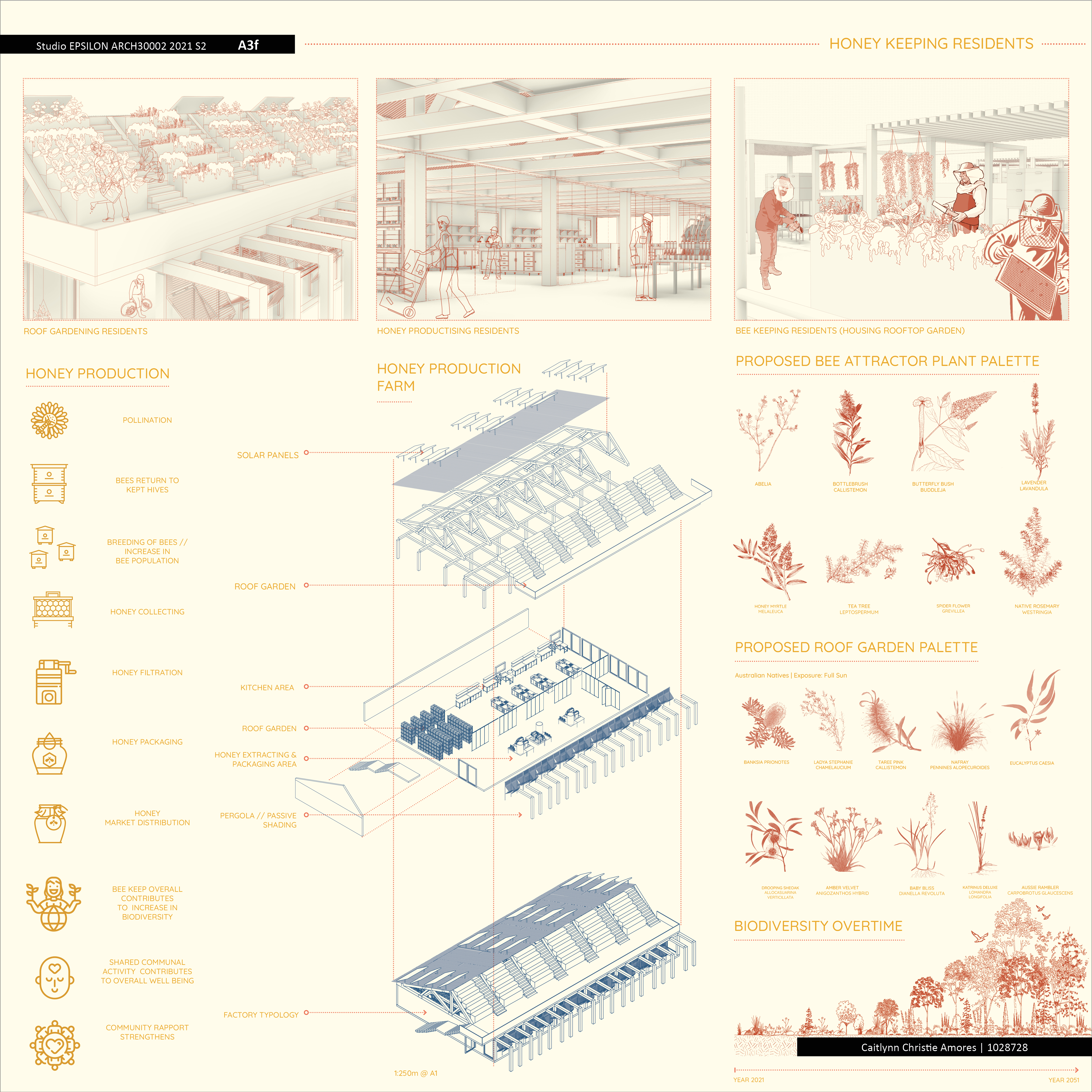
Creating architecture that addresses community safety and therefore designs for (1) passive surveillance, architecture which encourages social interaction and (2) facilitates dialogue, implementing a honey production and bee keeping farm which strengthens the community and an individual’s sense of purpose (3) and additionally is a way of (4) sharing and maintaining knowledge, resources and services in the community. Lastly, the project considers (5) flexibility in the designs of the units and communal areas for residents to activate for mixed uses.
Although this issue extends beyond architecture, starting here in the homes of the displaced is where us as designers can begin to validate its significance and implement design strategies in hopes to foster healthy relationships and growth of individuals and families in domestic and communal spaces.
Need enrolment assistance?
Stop 1 provides enrolment and other support to Bachelor of Design and Melbourne School of Design students.